
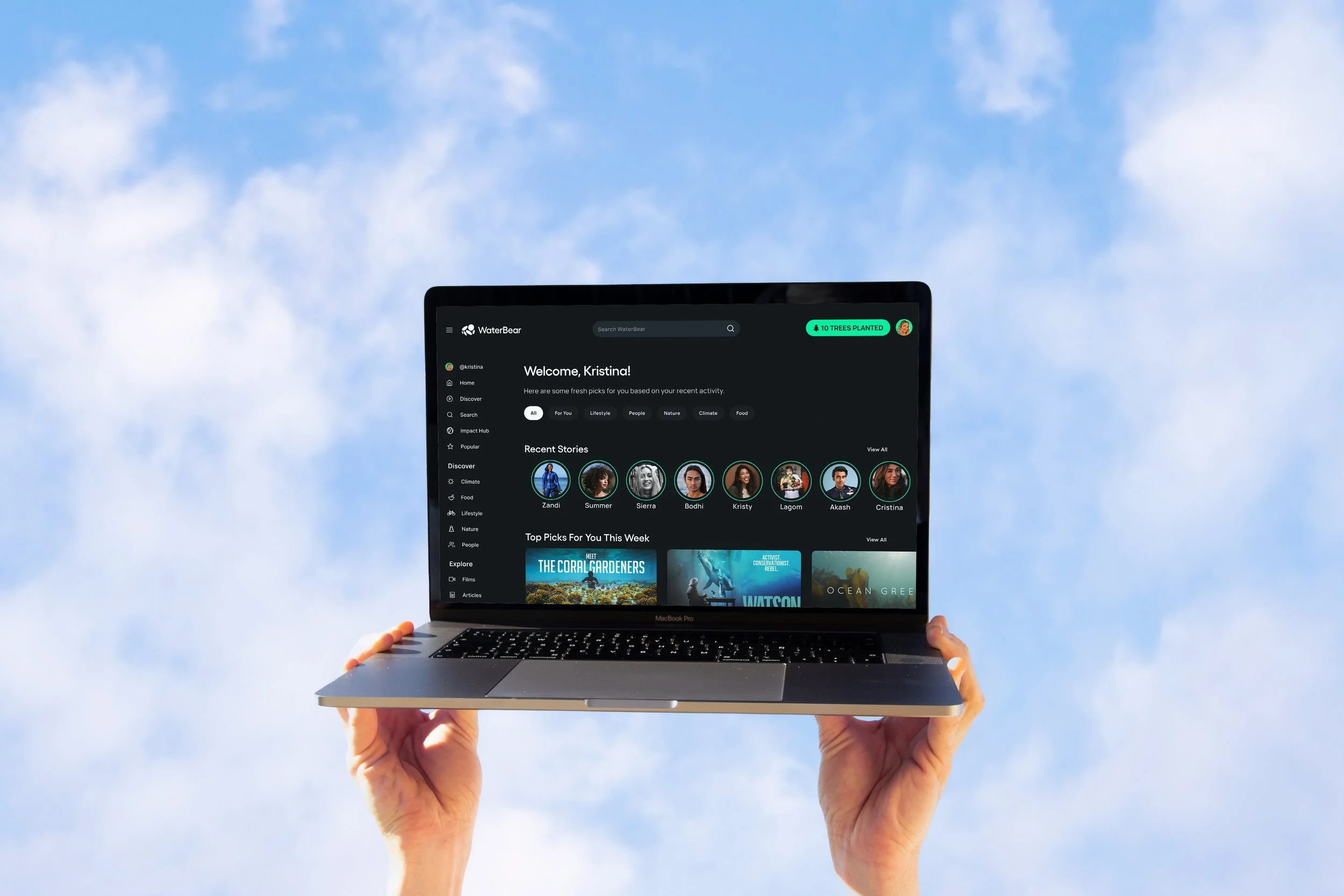
Rebuilding engagement for a platform built to change the world — not just stream it.

When paid marketing was cut and engagement dropped, WaterBear needed more than a redesign. I rebuilt the onboarding, engagement, and participation systems from the ground up — recovering 42% of monthly active users organically and driving a 56% increase in daily active users through product-led growth alone.
OverviewThe Challenge
In mid-2025, paid marketing efforts were discontinued, and engagement metrics declined across the platform. This exposed underlying product challenges:
Users did not always understand the platform’s value early
Engagement often ended after passive viewing
Pathways from inspiration to action were unclear
Retention signals and repeat usage were inconsistent
The Opportunity
The opportunity was not simply to redesign screens, but to rethink engagement as a behavioral system.Product Strategy & Design Approach
Rather than treating this as a purely visual redesign, I approached the problem as a behavioral and systems challenge.
1.
Early exploration showed that users needed to quickly understand:
What makes WaterBear different from other streaming platforms
Why their time on the platform matters
I focused on onboarding flows that prioritized clarity over novelty, introducing WaterBear’s mission and mechanics in simple, human language rather than abstract impact metrics.
Clarify value proposition early
2.
A key shift was reframing the experience from watching content to participating in change.
This meant designing UX patterns that:
Reinforced progress and contribution
Made impact feel tangible and immediate
Encouraged repeat engagement without pressure or guilt
Design for behavior, not consumption
3.
WaterBear’s impact model involves partnerships, donations, and measurable outcomes — all of which can feel abstract to users.
My role was to:
Translate complex backend mechanics into intuitive front-end experiences
Reduce cognitive load while maintaining transparency
Design interactions that felt empowering, not transactional
This required close collaboration with non-design stakeholders to ensure accuracy without sacrificing usability.
Simplify complex impact mechanics
Key Design Contributions
I redesigned onboarding flows to introduce the platform’s value more clearly while reducing friction and information overload.
Design improvements included:
Sequencing information to reduce cognitive load
Introducing contextual value messaging earlier
Delaying complexity until after initial engagement
Aligning onboarding with user motivation rather than feature explanation
These changes strengthened the transition from sign-up to first meaningful interaction.
Onboarding & Activation

Engagement & Behavioral Reinforcement
Beyond onboarding, I focused on strengthening engagement loops across the product.
Key contributions included:
Designing contextual prompts aligned with user intent moments
Improving content discovery pathways
Introducing reinforcement mechanisms to encourage repeat participation
Supporting consistency across surfaces through scalable UX patterns
This work helped reposition engagement from passive consumption toward ongoing participation.
Watch for Impact: Designing Participation Pathways
A major initiative was Watch for Impact (WFI), a campaign system connecting content consumption with measurable real-world action.
I led the design of the end-to-end campaign experience, including:
Campaign entry surfaces
Post-watch activation prompts
Participation flows
Feedback and reinforcement mechanisms
The goal was to bridge the gap between inspiration and action by creating a clear behavioral pathway supported by immediate reinforcement.
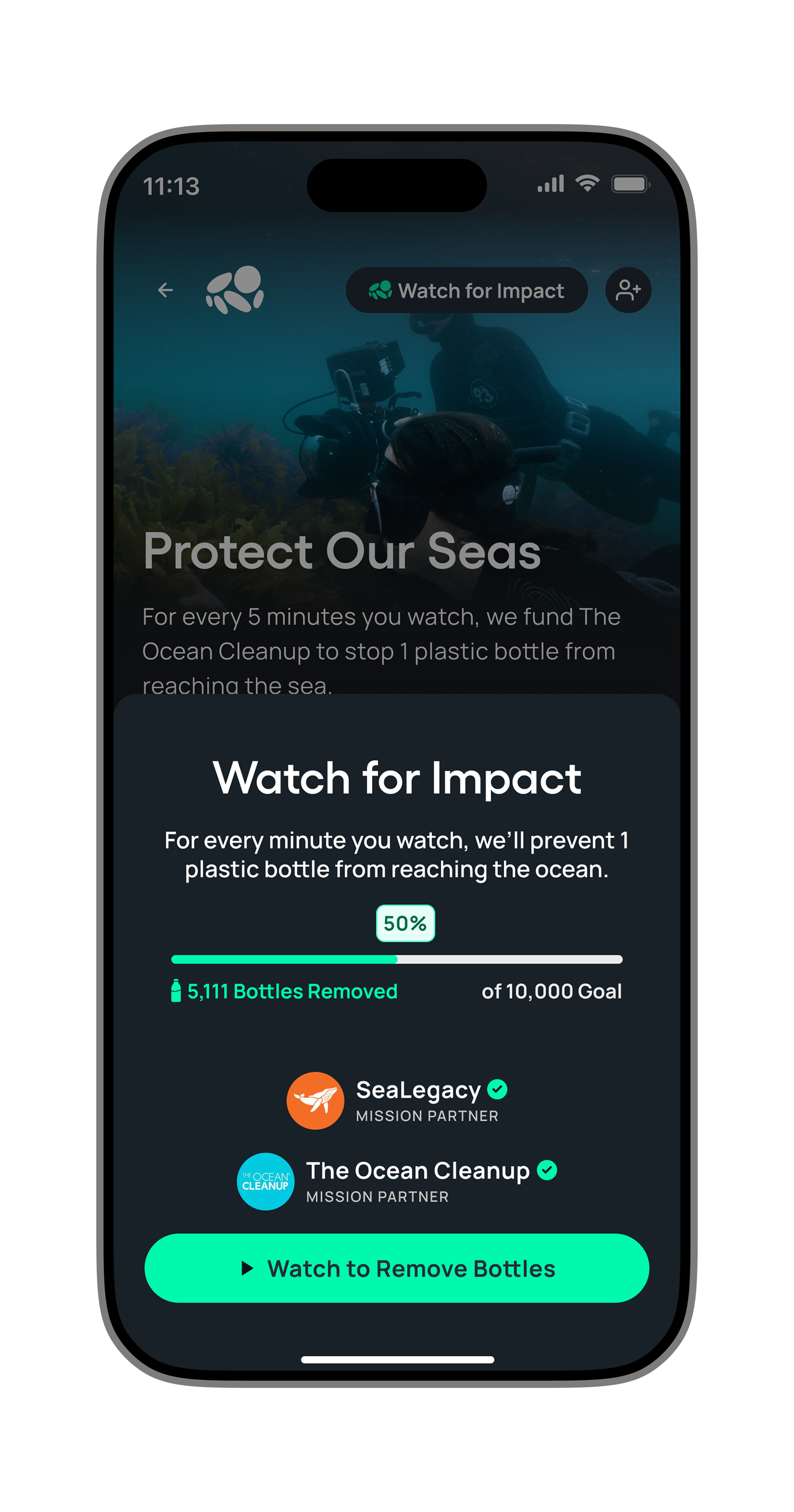
• Integrated campaigns into core product surfaces
• Reduced friction between viewing and participation
• Positioned impact opportunities within natural browsing flows
Entry Points & Campaign Discovery
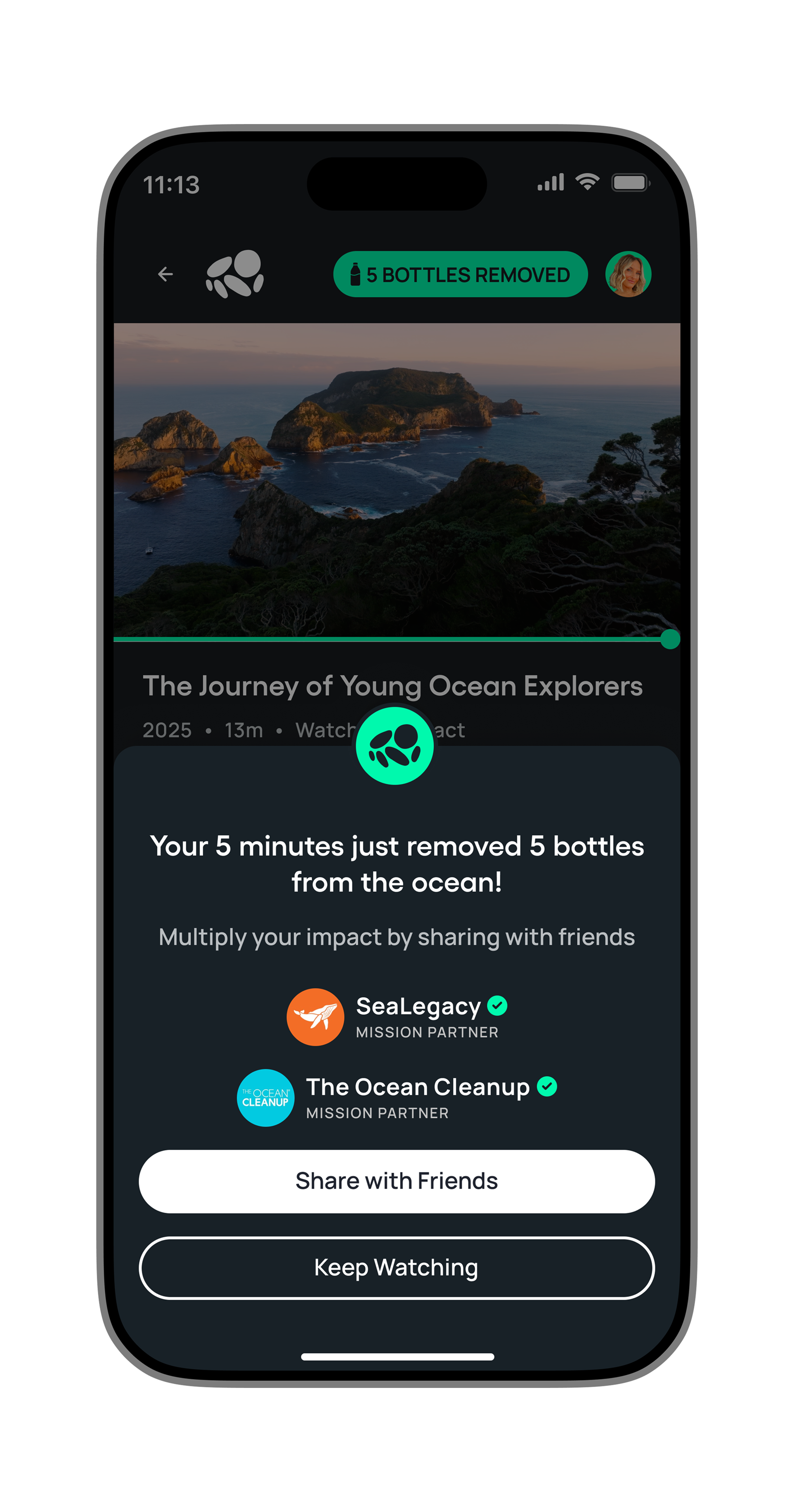
• Introduced clear pathways from content consumption to action
• Reinforced emotional momentum immediately after viewing
• Increased likelihood of participation through contextual prompts
Post-Watch Activation
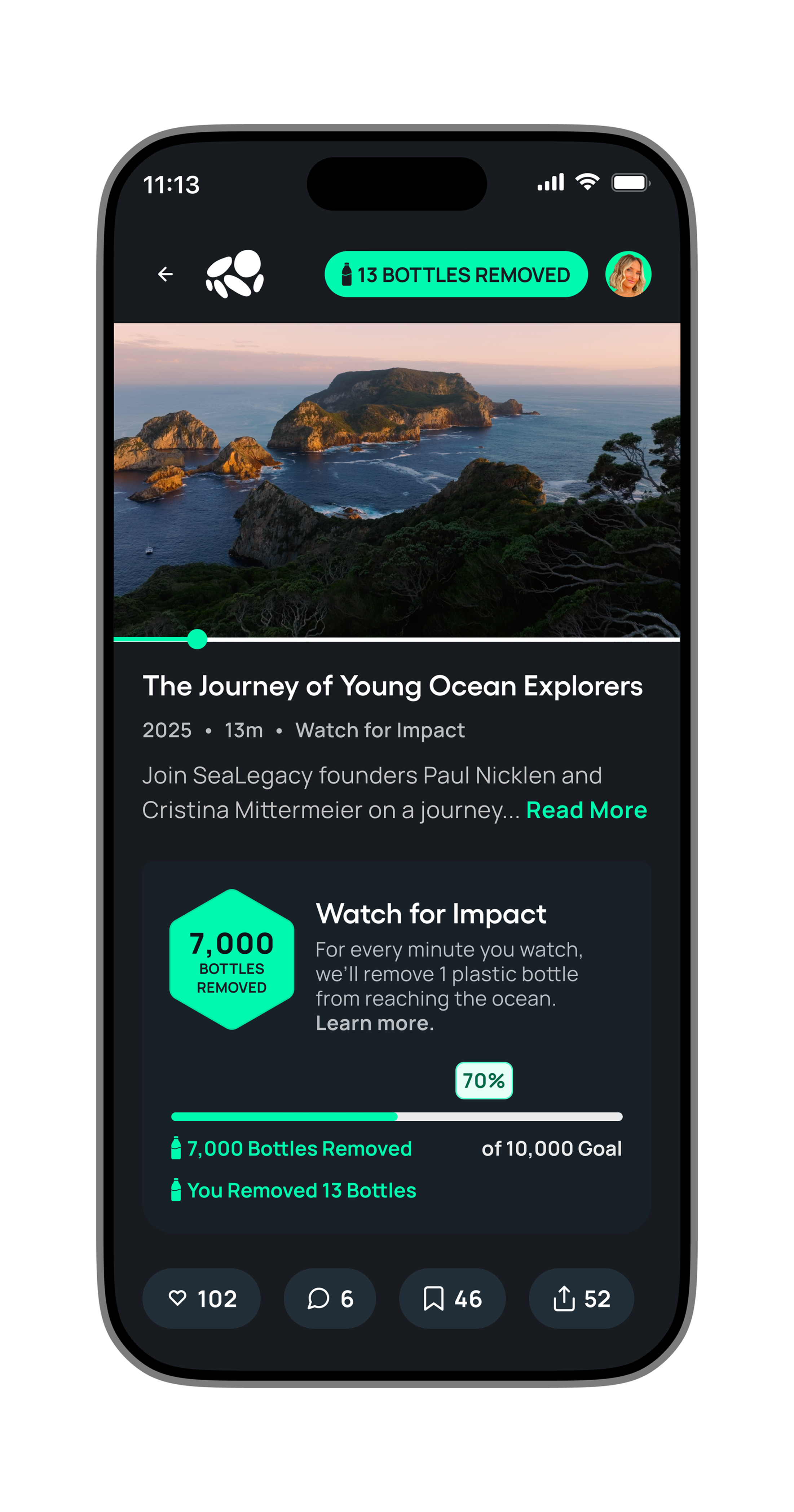
• Simplified participation steps to reduce cognitive load
• Clarified impact outcomes and user contribution
• Designed scalable templates for multiple campaigns
Action Experience
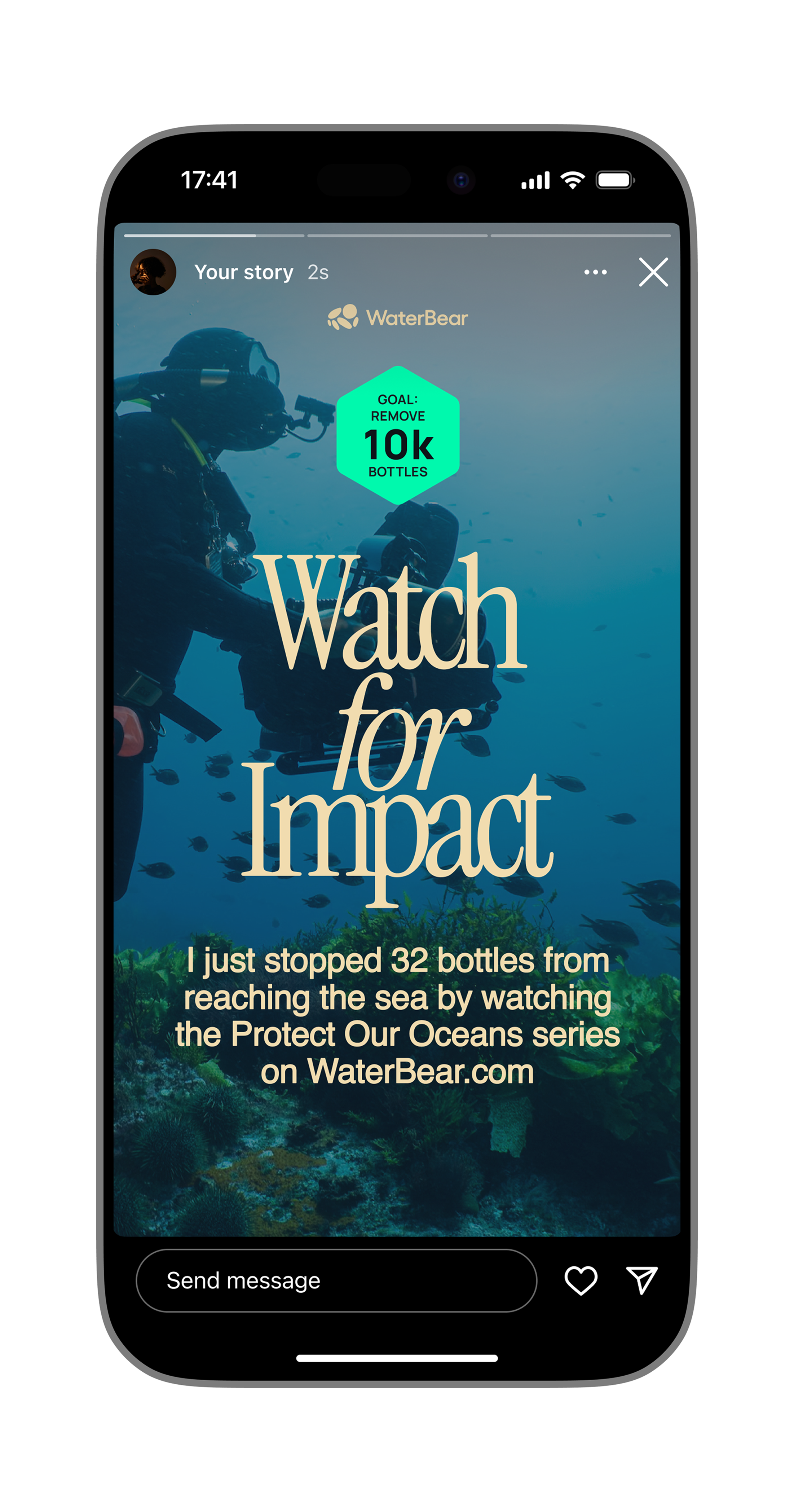
• Provided immediate confirmation of user contribution
• Strengthened motivation through visible progress
• Supported repeat engagement through positive reinforcement
Feedback & Reinformcement

After paid marketing was discontinued in June, engagement metrics declined across the platform. Following onboarding and engagement improvements launched in August, usage began to recover organically, with measurable improvements in daily activity, session frequency, and retention indicators over subsequent months.
The launch of Watch for Impact campaigns in November further accelerated engagement by providing clear pathways from viewing to participation.
Outcomes & Impact
increase in daily active users from October to Deember
+56%
Improvement in platform stickiness from 4.3% to 6.2%
increase in daily sessions, indicating deeper engagement
+47%
Monthly active users recovering from 4.5k in August to 6.4k in December (~42% growth)
These improvements reflected clearer onboarding, stronger reinforcement loops, and more cohesive engagement pathways across the product.