
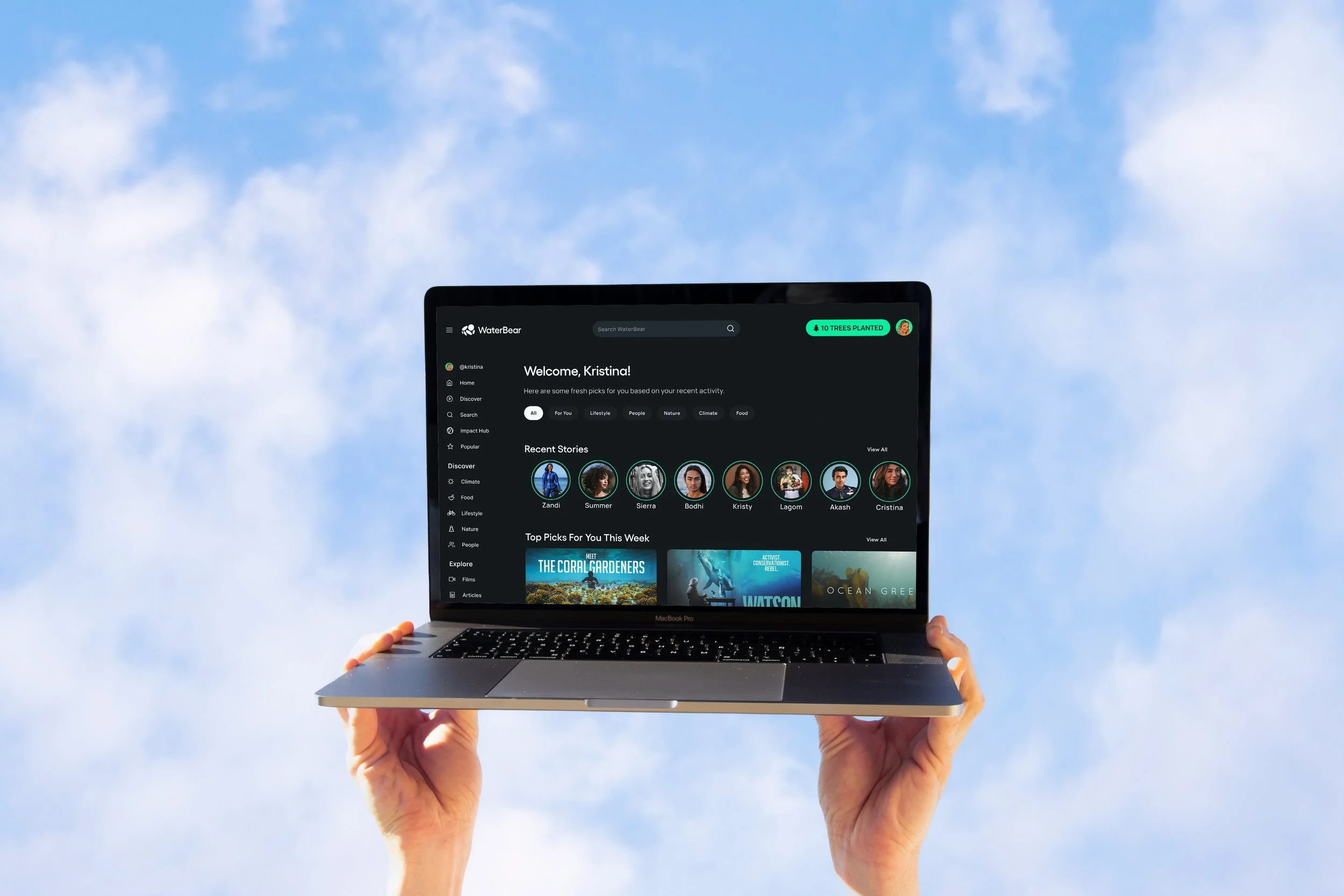
Rebuilding engagement for a platform built to change the world, not just stream it.

I joined WaterBear as Senior Product Designer and the sole designer on the product, working directly with the CEO, Head of Product, and engineering lead. My remit covered the full user experience: from onboarding and activation through to engagement loops, campaign participation, and platform-level UX systems.
OverviewTITLE
Senior Product Designer
TEAM
Sole designer
PLATFORM
iOS · Android · Web
STAGE
2024 → Present
Janete Perez — Chief Product OfficerSam Sutaria — CEONoel Baron — Chief Technology OfficerMirko Tosoni — Global Head of Marketing & CommunityContent Team
Impact & Partnerships TeamWorked directly with
Onboarding & activation
End-to-end redesign of sign-up to first meaningful interaction
Engagement systems
Behavioral loops, reinforcement patterns, and repeat participation
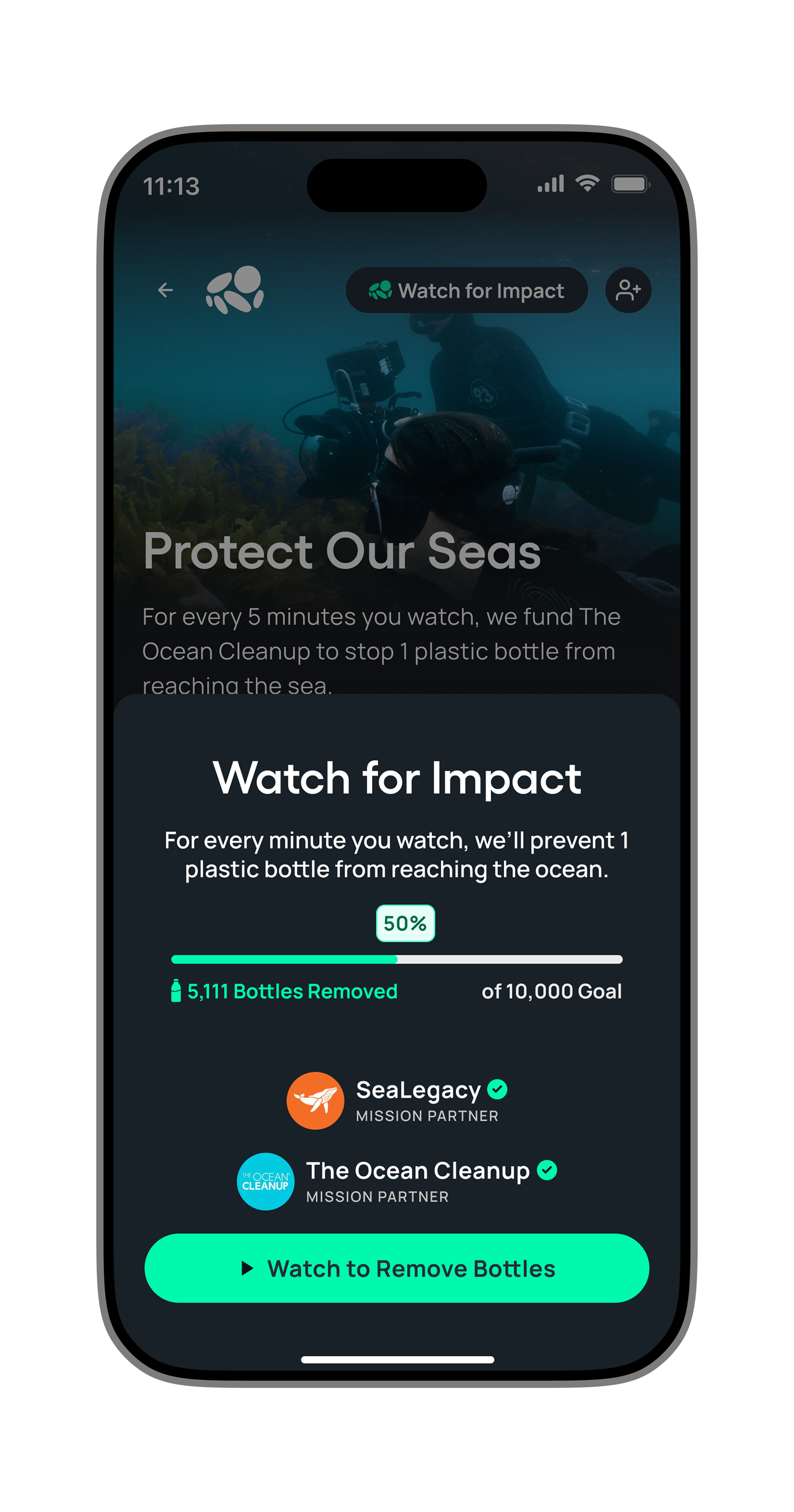
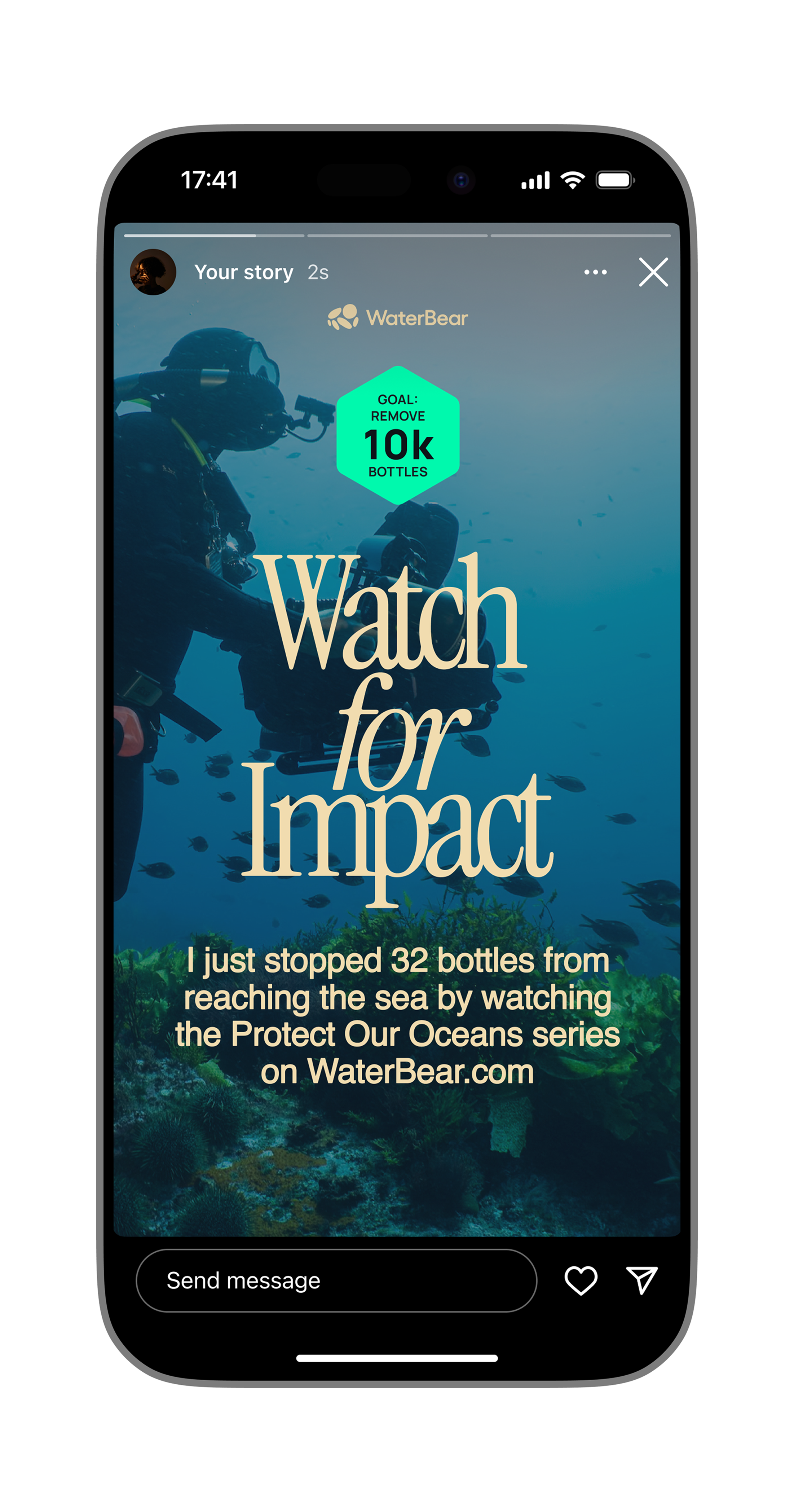
Watch for Impact
Full campaign experience from entry point to post-watch action
Platform UX & systems
Scalable patterns, content discovery, and cross-surface consistency
The Challenge
When paid marketing was cut and engagement dropped, WaterBear needed more than a redesign. I rebuilt the onboarding, engagement, and participation systems from the ground up. The result was 42% MAU recovery and a 56% increase in daily active users through product-led growth alone.
PROBLEM 1
Value wasn't landing early enough
Users arrived without a clear sense of what made WaterBear different from any other streaming service. Without that understanding, there was no reason to stay — or come back.
PROBLEM 2
Watching ended at watching
The platform's real value was participation — campaigns, actions, real-world impact. But the product treated content consumption as the destination, not the starting point. Engagement ended when the video did.
PROBLEM 3
The path from inspiration to action was invisible
WaterBear's impact model — partnerships, donations, measurable outcomes — was powerful but abstract. Users felt something watching the content. They just didn't know what to do with that feeling.
The opportunity wasn't to redesign screens, it was to rethink engagement as a behavioral system that connected storytelling, motivation, and action into a single coherent experience.
Product Strategy & Design Approach
Rather than treating this as a visual redesign, I approached the problem as a behavioral and systems challenge. Three principles guided every decision.
Clarify value proposition early
Early exploration showed that users needed to quickly understand:
Why their time on the platform matters
What makes WaterBear different from other streaming platforms
I focused on onboarding flows that prioritized clarity over novelty, introducing WaterBear’s mission and mechanics in simple, human language rather than abstract impact metrics.

Design for behavior, not consumption
A key reframe was shifting the experience from watching content to participating in change. This meant designing UX patterns that reinforced progress and contribution, made impact feel tangible and immediate, and encouraged repeat engagement without pressure or guilt. Every interaction was evaluated against one question: does this bring users closer to action, or further from it?

Simplify complex impact mechanics
WaterBear's impact model was powerful but abstract. I translated complex backend mechanics into intuitive front-end experiences — reducing cognitive load while keeping impact transparent and interactions feeling empowering, not transactional.

Core UX problems I solved
-
![]()
Entry Points & Campaign Discovery
Integrated campaigns into core product surfaces. Reduced friction between viewing and participation. Positioned impact opportunities within natural browsing flows.
-
![]()
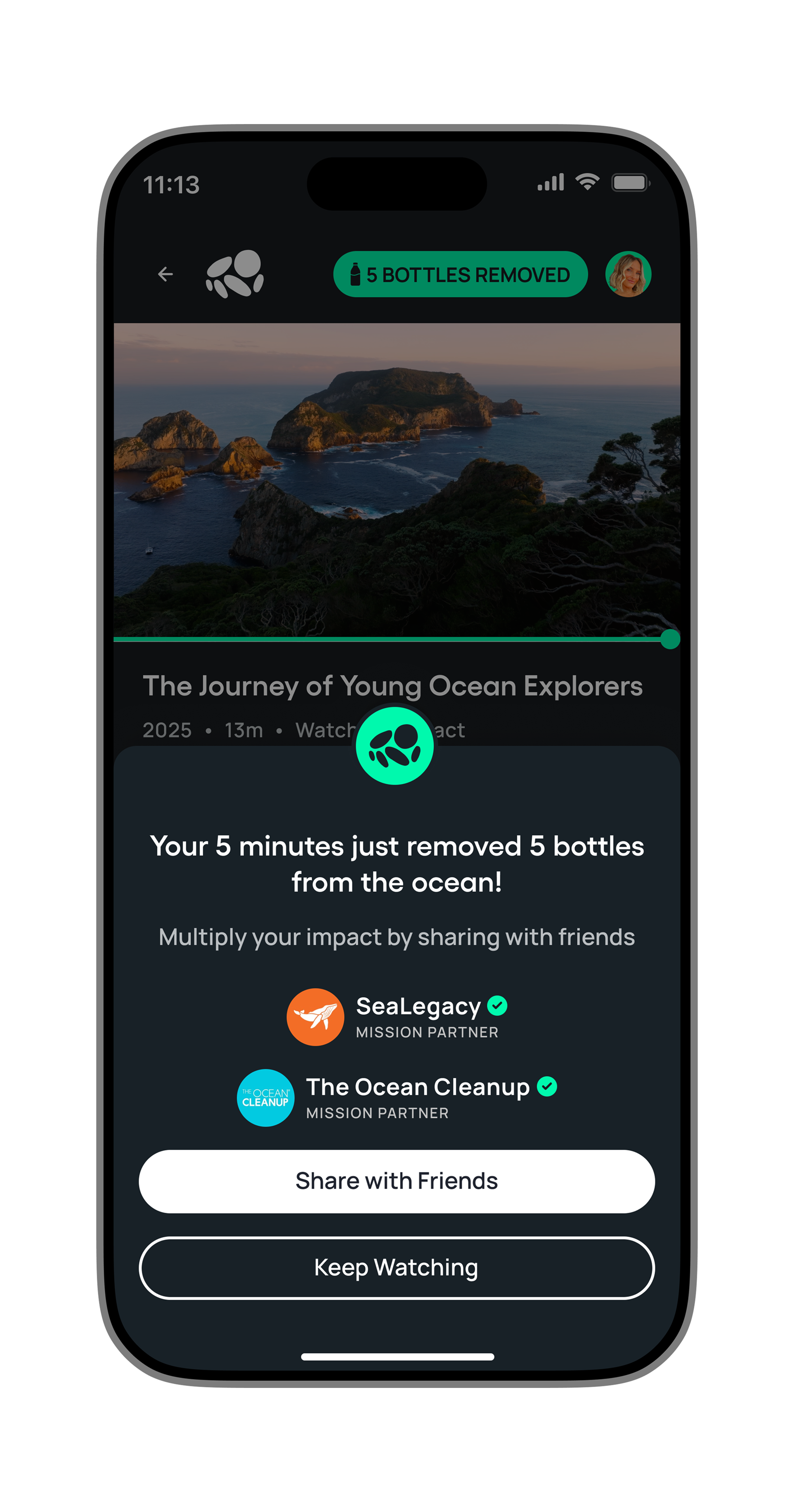
Post-Watch Activation
Introduced clear pathways from content consumption to action. Reinforced emotional momentum immediately after viewing. Increased likelihood of participation through contextual prompts.
-
![]()
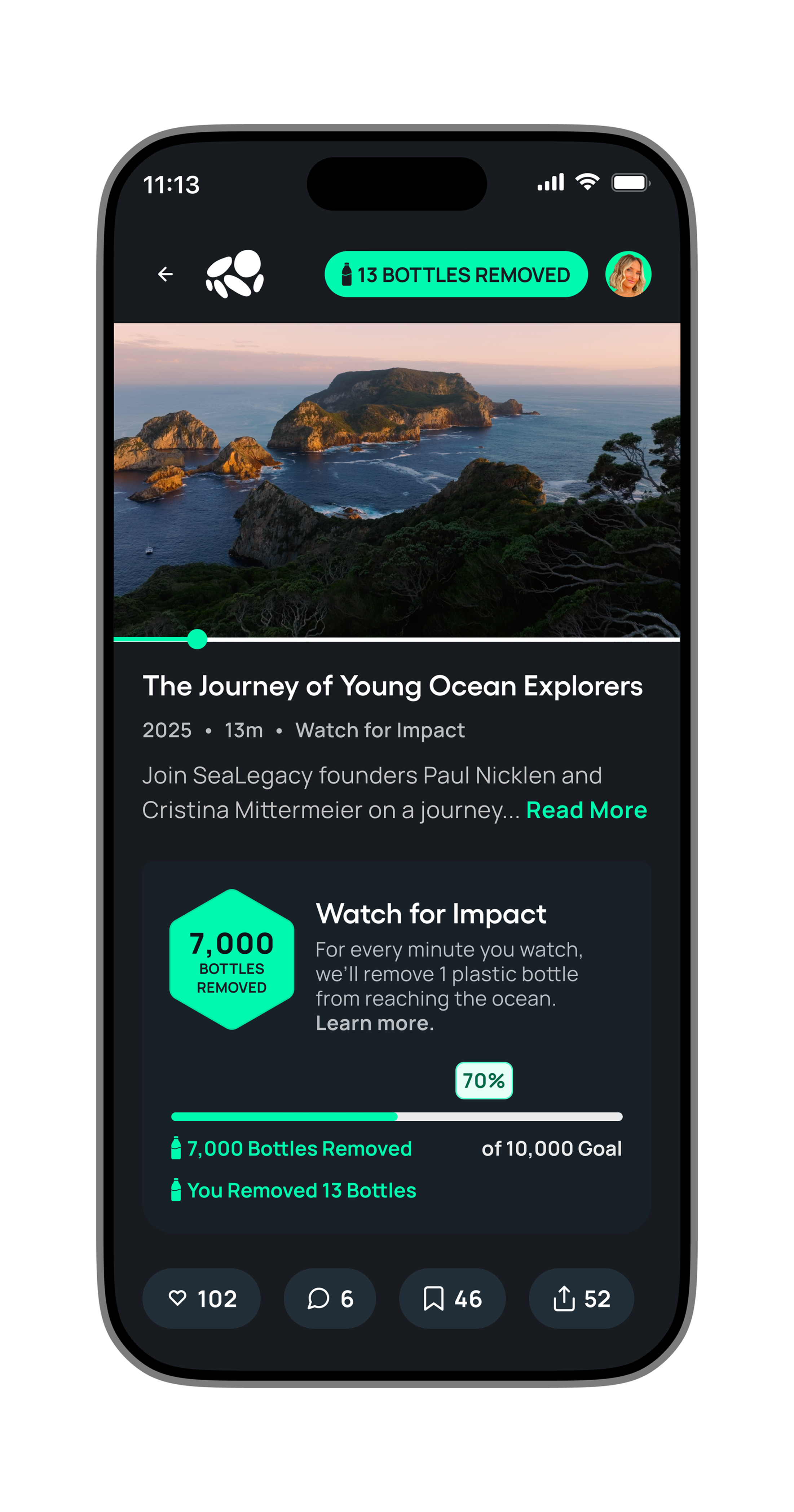
Action Experience
Simplified participation steps to reduce cognitive load. Clarified impact outcomes and user contribution. Designed scalable templates for multiple campaigns.
-
![]()
Feedback Reinforcement
Provided immediate confirmation of user contribution. Strengthened motivation through visible progress. Supported repeat engagement through positive reinforcement.
Outcomes & Impact
After paid marketing was discontinued in June, engagement declined across the platform. Onboarding and engagement improvements launched in August began recovering usage organically. Watch for Impact launched in November and further accelerated participation.
Daily Active Users+56%
October to December, through product-led growth alone
Daily Sessions+47%
Indicating deeper engagement and repeat participation
Platform Stickiness4.3% to 6.2%
DAU/MAU ratio improvement over the same period
Monthly Active Users4.5K to 6.4K
~42% recovery from August low to December
Timeline
June 2025Paid marketing discontinued. Engagement metrics begin to decline.
August 2025Redesigned onboarding and engagement improvements launch. Organic recovery begins.
November 2025Watch for Impact launches, connecting content consumption with real-world participation and accelerating engagement further.
December 2025Peak metrics recorded across DAU, sessions, stickiness, and MAU recovery.
These improvements reflected clearer onboarding, stronger reinforcement loops, and more cohesive engagement pathways across the product.
ReflectionDesigning for impact at scale requires restraint. This work reinforced the importance of sequencing complexity, designing systems over screens, and grounding engagement mechanics in clarity rather than novelty. Watch for Impact demonstrated how connecting storytelling, motivation, and action into a cohesive behavioral framework can support sustained participation over time. More than anything, this project reflects how I approach product design: clarifying complex systems, aligning user motivation with product goals, and building foundations that scale with the product.
Working on a platform built around environmental action reinforced why I care about the products I choose to design. The best design work happens when your values and the mission are the same thing.